Read the interval, then ask what it excludes.
This interface is deliberately centered on CI + MCID logic. It is built to separate truly neutral results from merely negative ones, and to stop underpowered trials from being mislabeled as definitive.
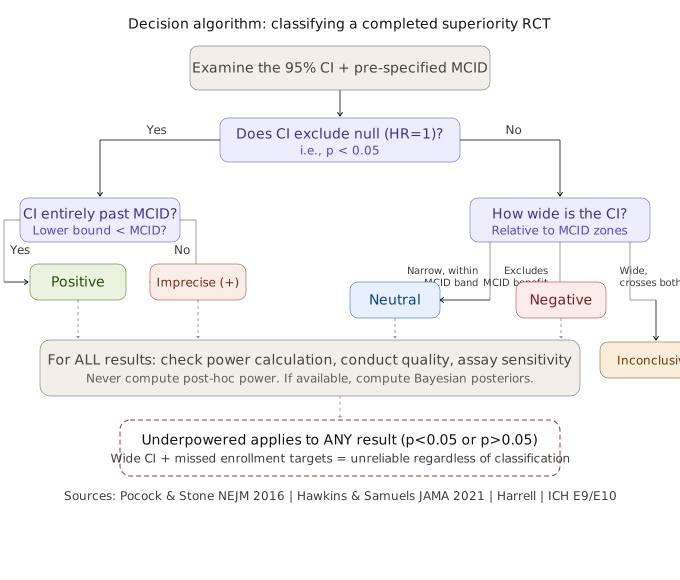
A cleaner way to read randomized trials: inspect the confidence interval, compare it with the null and MCID thresholds, and decide whether the result is positive, imprecise, neutral, negative, inconclusive, or harmful.
This interface is deliberately centered on CI + MCID logic. It is built to separate truly neutral results from merely negative ones, and to stop underpowered trials from being mislabeled as definitive.
Use the reported ratio and 95% CI, or derive an odds ratio from 2x2 event counts.
Define what counts as clinically important, not just statistically non-null.
The app explains why the result is positive, imprecise, neutral, negative, inconclusive, or harmful.
CI excludes the null and clears the benefit threshold across its full range.
Benefit is statistically significant, but the CI still crosses the MCID for magnitude.
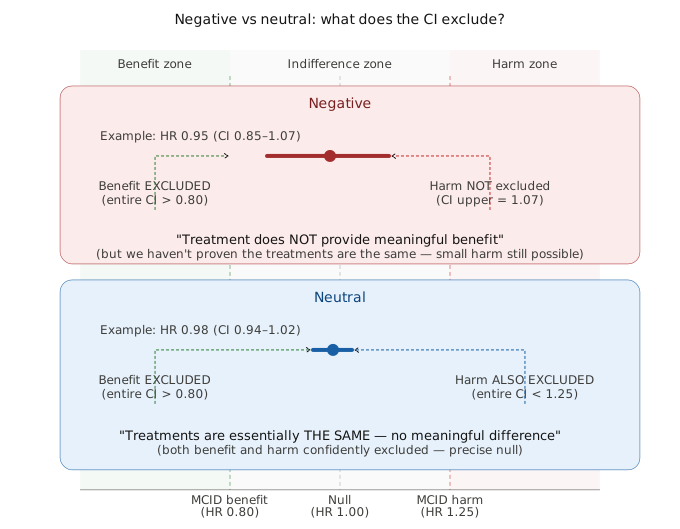
Both clinically meaningful benefit and clinically meaningful harm are excluded.
Clinically important benefit is excluded, but the interval still leaves open a relevant downside.
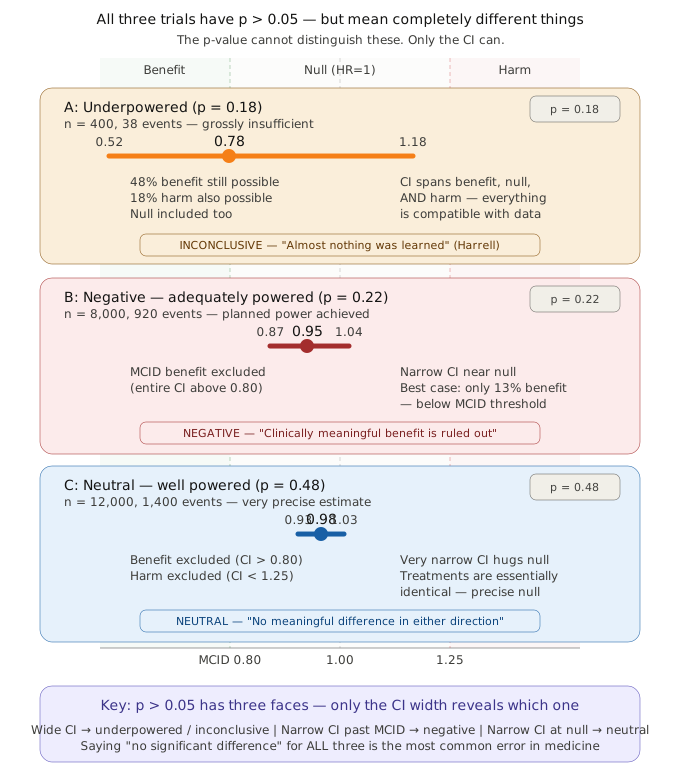
The CI is too wide; clinically important benefit or harm remains plausible.
The whole interval is on the harm side, beyond the clinically important harm threshold.
First ask whether the null is excluded, then ask whether the interval clears the MCID for benefit or harm. Statistical significance alone is not the endpoint.
Non-significant trials can still be neutral, negative, or inconclusive. Those are not interchangeable statements.
Negative means meaningful benefit is excluded. Neutral is stronger: both meaningful benefit and meaningful harm are excluded.